Simple, meaningful ways to keep kids engaged—without a screen
If you’ve spent any time around kids lately, you already know how easy it is for screens to take over. And I get it—sometimes you just need a break, and a tablet or TV can feel like the easiest option. But if you’re anything like me, you also know there’s something missing when that becomes the default. Especially for kids who naturally love animals, being outside, and using their imagination.
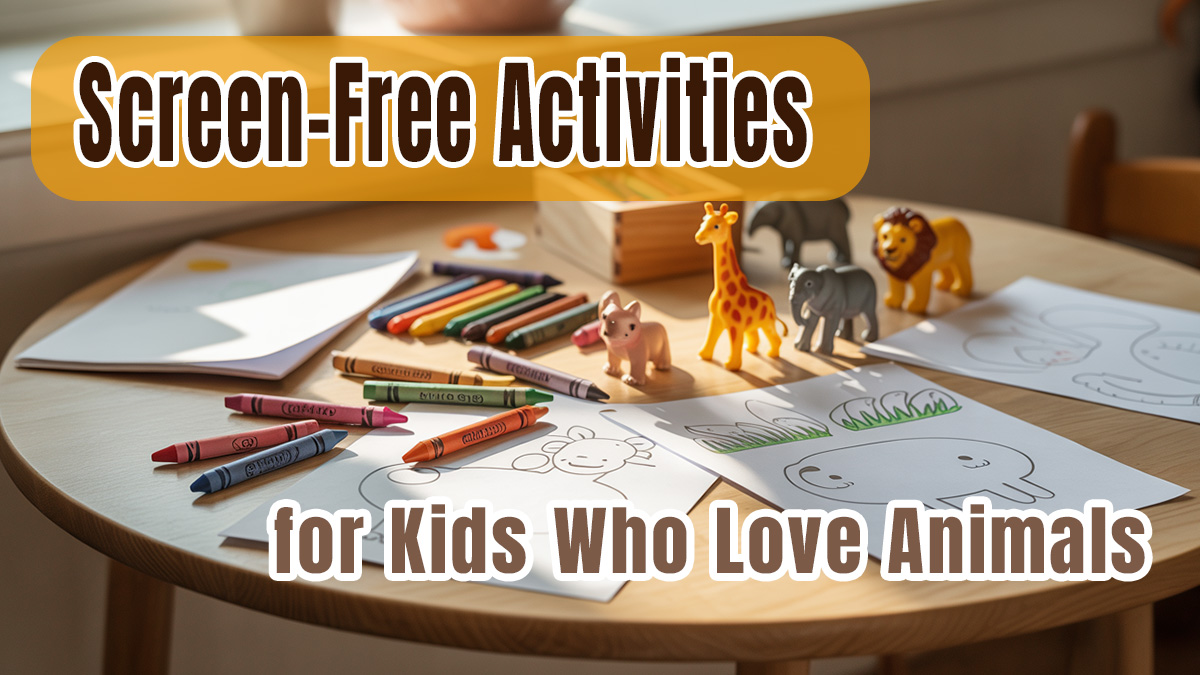
Animals have a way of pulling kids into the moment. They spark curiosity, empathy, and creativity in a way that a screen just can’t.
The good news? You don’t need a ranch full of horses to give kids that kind of experience (although I’ll admit… it helps 😊).
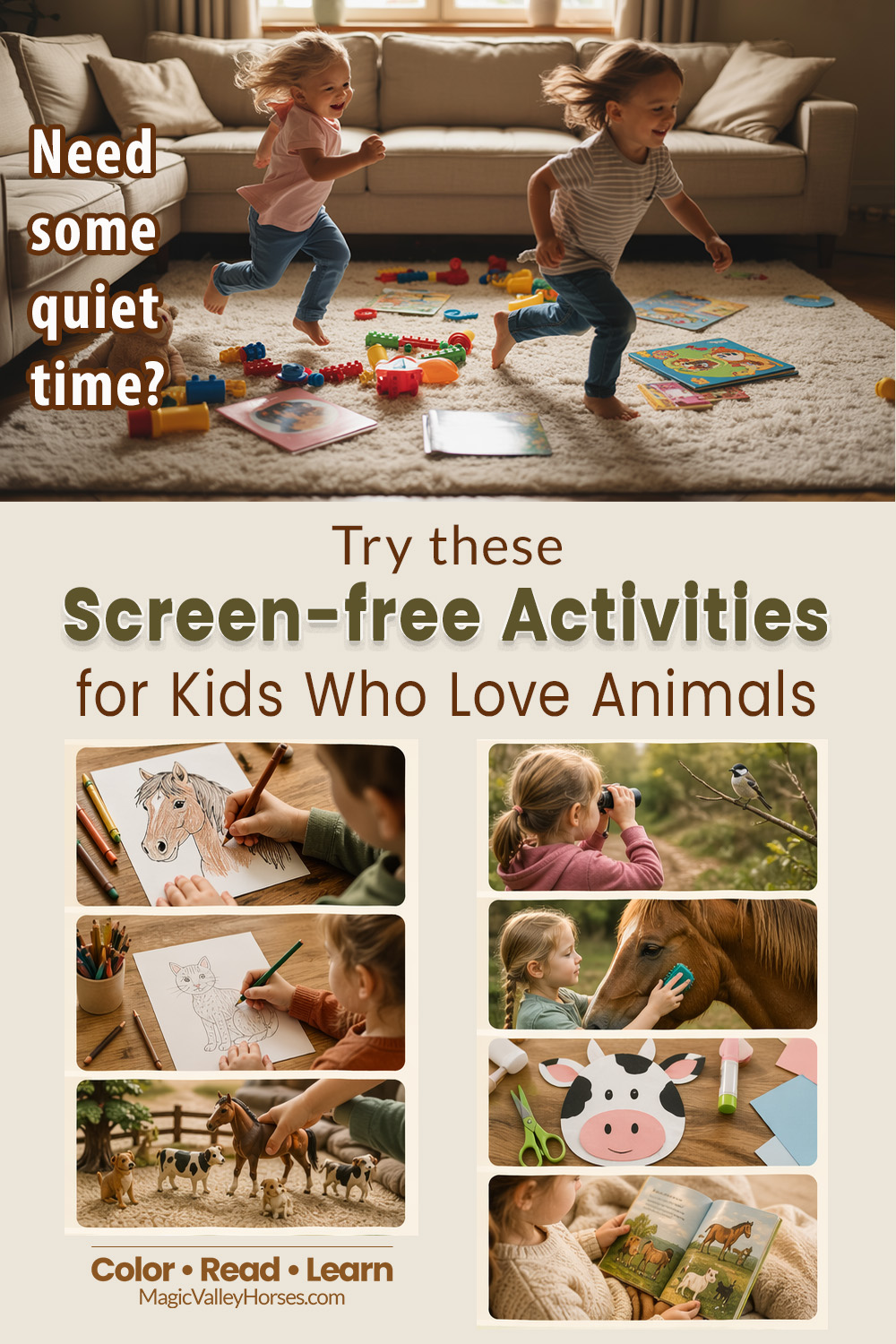
Here are some simple, screen-free activities for kids that tap into that love of animals and keep kids engaged in a way that actually sticks.
🐴 1. Animal-Themed Coloring (with a Purpose)
Coloring might seem like the obvious one—but it’s also one of the most powerful when it’s done right.
Kids who love animals don’t just want to color…
They want to connect.
That’s where animal-themed coloring really shines.
Instead of random pages, give them:
- Animals they recognize or love
- Simple scenes they can relate to
- Space to imagine what the animal is doing or feeling
You can take this a step further by:
- Asking questions while they color:
“Do you think this horse is feeling calm or excited?” - Letting them name the animal
- Creating a short story about the picture
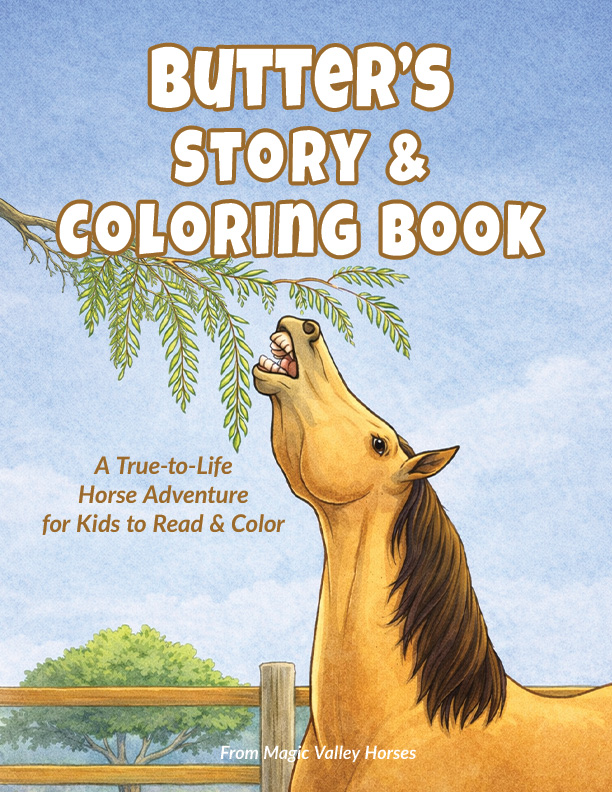
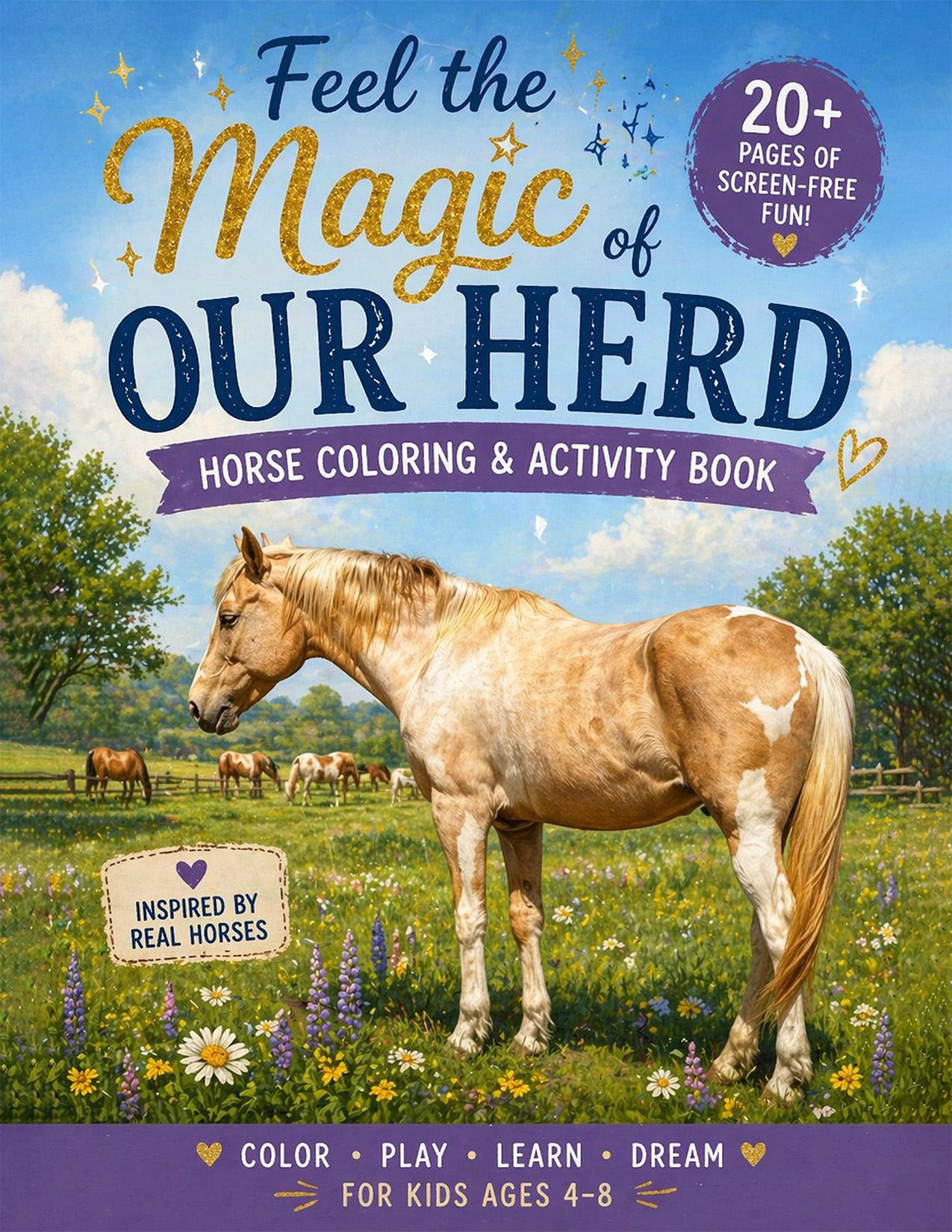
That’s actually a big part of why I started creating my own coloring books—simple, easy-to-color pages inspired by real animals. You can see all of them here.
And when those animals are inspired by real horses with real personalities… it becomes something even more meaningful.
🐾 2. Draw Your Own Animal
This one is simple and surprisingly powerful.
Instead of giving them a finished image, ask:
- “Can you draw your favorite animal?”
- “What would your dream horse look like?”
- “If you had your own farm, what animals would you have?”
You’ll get everything from stick figures to full-blown imaginative masterpieces.
Make it more fun by:
- Giving them prompts (wild animal, farm animal, pet, fantasy animal)
- Letting them create a “profile” for their animal (name, personality, favorite food)
- Turning it into a mini “animal book”
This builds creativity in a completely different way than coloring—and kids love the ownership of creating something from scratch.
🐴 3. Pretend Play with Animals
This is where things really come to life.
Kids don’t just love animals—they love being animals.
Encourage:
- Playing “horse,” “farmer,” or “veterinarian”
- Setting up a pretend barn or animal rescue
- Using stuffed animals as characters
You can add structure if needed:
- Create simple “jobs” (feeding time, grooming, check-ups)
- Use household items as props (brushes, buckets, blankets)
- Set up a small “animal area” indoors or outside
This kind of play builds:
- imagination
- problem-solving
- emotional awareness
And honestly… it’s just fun to watch.
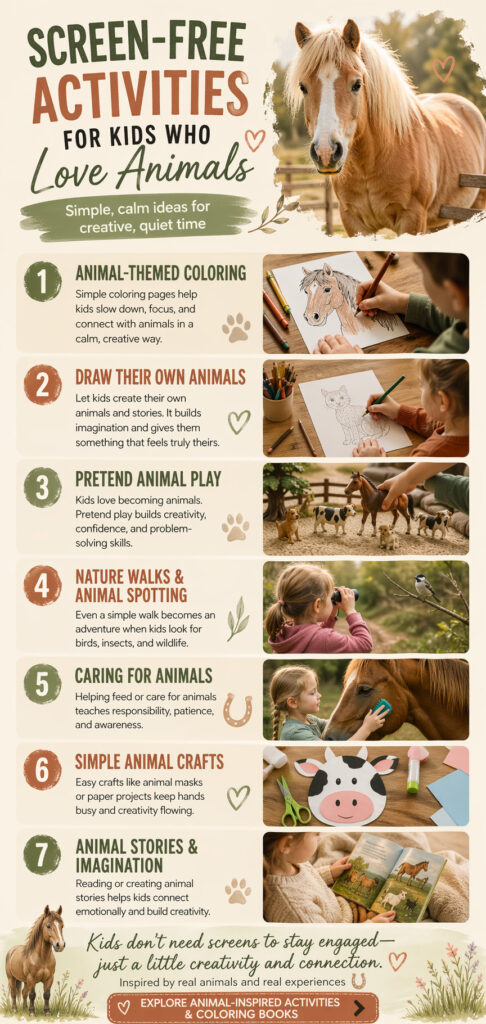
🌿 4. Nature Walks with an Animal Focus
You don’t need a zoo or a ranch for this.
Even a simple walk can turn into an animal adventure.
Try:
- Looking for birds, squirrels, insects
- Listening for animal sounds
- Watching how animals move and interact
Make it interactive:
- “How many animals can we spot?”
- “What do you think that bird is doing?”
- “Where do you think animals go when it rains?”
You can even bring it back home:
- Draw what they saw
- Write (or tell) a short story about it
- Compare different animals they noticed
This builds awareness and curiosity in a way that screens just can’t replicate.
🐶 5. Help Care for a Real Animal (Even a Small Way)
If there’s access to animals—take advantage of it.
Even simple interactions can be powerful:
- Feeding a pet
- Brushing a dog or horse
- Helping refill water bowls
- Watching how animals behave
Kids learn so much just by being around animals:
- patience
- responsibility
- reading body language
I’ve seen firsthand how even a short interaction with a horse can completely change how a child shows up—calmer, more focused, more aware.
You don’t need a full program or lesson.
Just being around animals is enough.
🎨 6. Simple Animal Crafts
For kids who like hands-on activities, crafts are a great option.
Keep it simple:
- Paper plate animals
- Animal masks
- Cut-and-paste farm scenes
- DIY “barn” setups from boxes
You don’t need fancy supplies—just:
- paper
- crayons/markers
- glue
- a little imagination
This is a great way to extend interest in animals beyond coloring or drawing.
📚 7. Animal Stories (Reading or Creating)
Kids who love animals almost always love animal stories.
You can:
- Read books about animals
- Tell stories out loud
- Have them create their own
Make it interactive:
- “What happens next?”
- “How does the animal feel?”
- “What would you do?”
Or combine it with other activities:
- Color a page, then create a story about it
- Draw an animal, then tell its story
This builds imagination and emotional connection at the same time.
🐴 Bringing It All Together
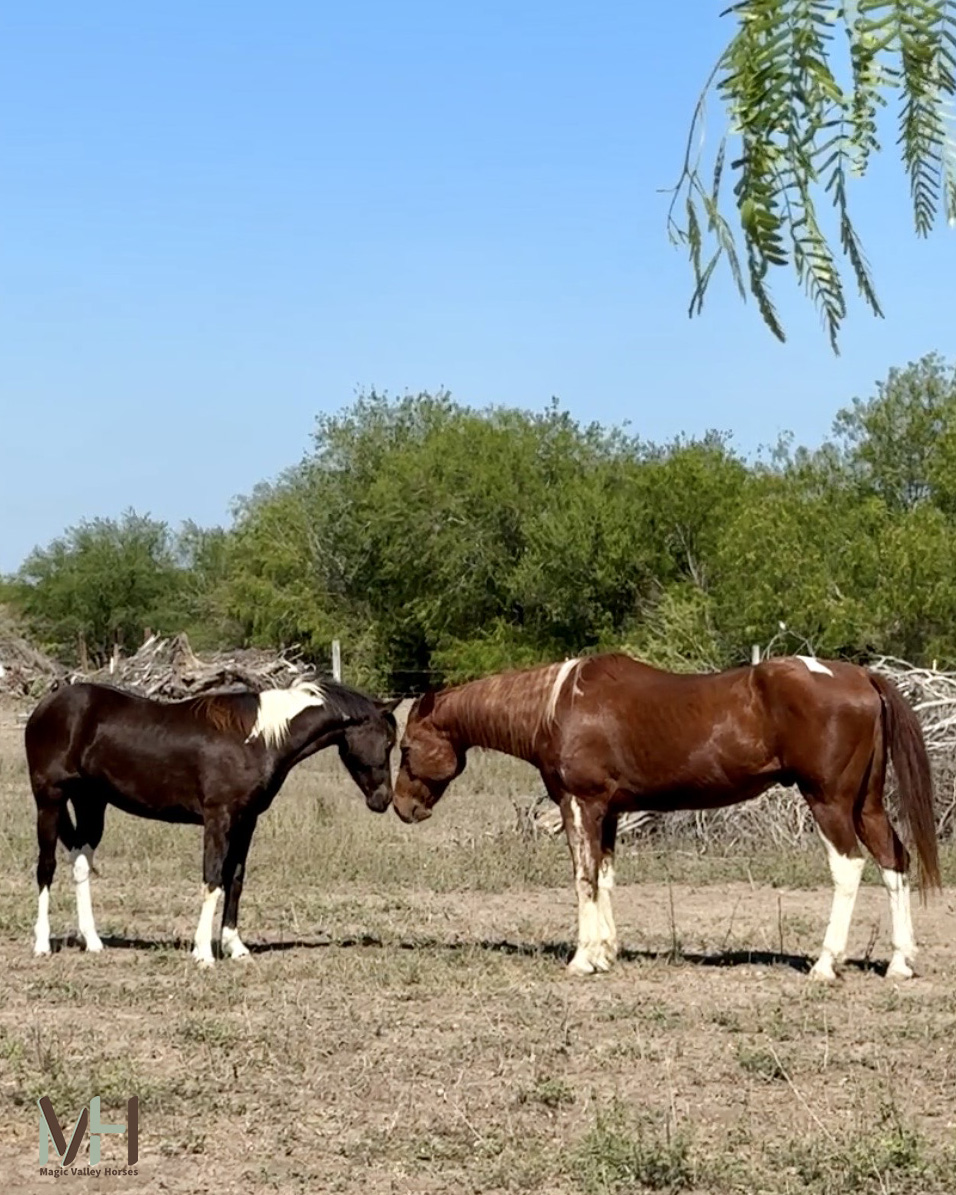 Here’s the thing I’ve noticed over the years…
Kids don’t just love animals because they’re cute.
They love them because:
- animals are honest
- animals are present
- animals don’t judge
And when kids engage with animals—even through something as simple as coloring or pretend play—they tap into that same sense of calm, curiosity, and connection.
That’s really what all of these activities are about.
Not just keeping kids busy…
But giving them something that feels real.
💛 A Simple Starting Point
If you’re not sure where to start, keep it easy:
- A few animal-themed coloring pages
- A short conversation about the animal
- Letting their imagination take it from there
That alone can turn a quiet afternoon into something meaningful.
If you’re looking for an easy place to start, you can explore all of the animal-inspired coloring books here.
And if you happen to have a child who especially loves horses…
well, you already know that’s where my heart is 😊
If you try any of these ideas, I’d love to hear how it goes. Kids always surprise us with what they come up with when we just give them a little space to explore.